Why leather sofas darken where you sit
The dark patch on the armrest is not dirt, and cleaning harder makes it worse. What body oils actually do to leather, why the type of leather decides everything, and what a coating can and cannot help with.
It appears gradually enough that nobody notices it happening. Then one day the light falls differently and there it is: the armrest is a shade darker than the side panel, the headrest is darker than the back, and the seat you always use is darker than the one you do not.
It is not dirt. It is you.
What is actually causing the darkening?
Body oil — from skin, hair and hair product — absorbed into the leather at the points of repeated contact, where it changes how the surface reflects light.
Human skin produces sebum continuously. Hands, forearms, the back of the neck and the back of the head are in contact with a sofa for hours at a time, most days, for years. Each contact deposits a very small amount of oil. Leather is a porous material that was, until relatively recently, skin itself, and it takes oil in readily.
The oil does not sit on the surface where a cloth can reach it. It migrates into the fibre structure, where it darkens the material from within and stays.
This is why the usual instinct fails. Cleaning harder does not lift it, because there is nothing on top to lift. Aggressive cleaning strips the protective topcoat instead, which makes the leather beneath more absorbent, which accelerates exactly the problem you were trying to solve.
Why does the type of leather change the answer?
Because five very different materials get sold under one word.
| Leather type | How it handles oil | Darkening risk |
|---|---|---|
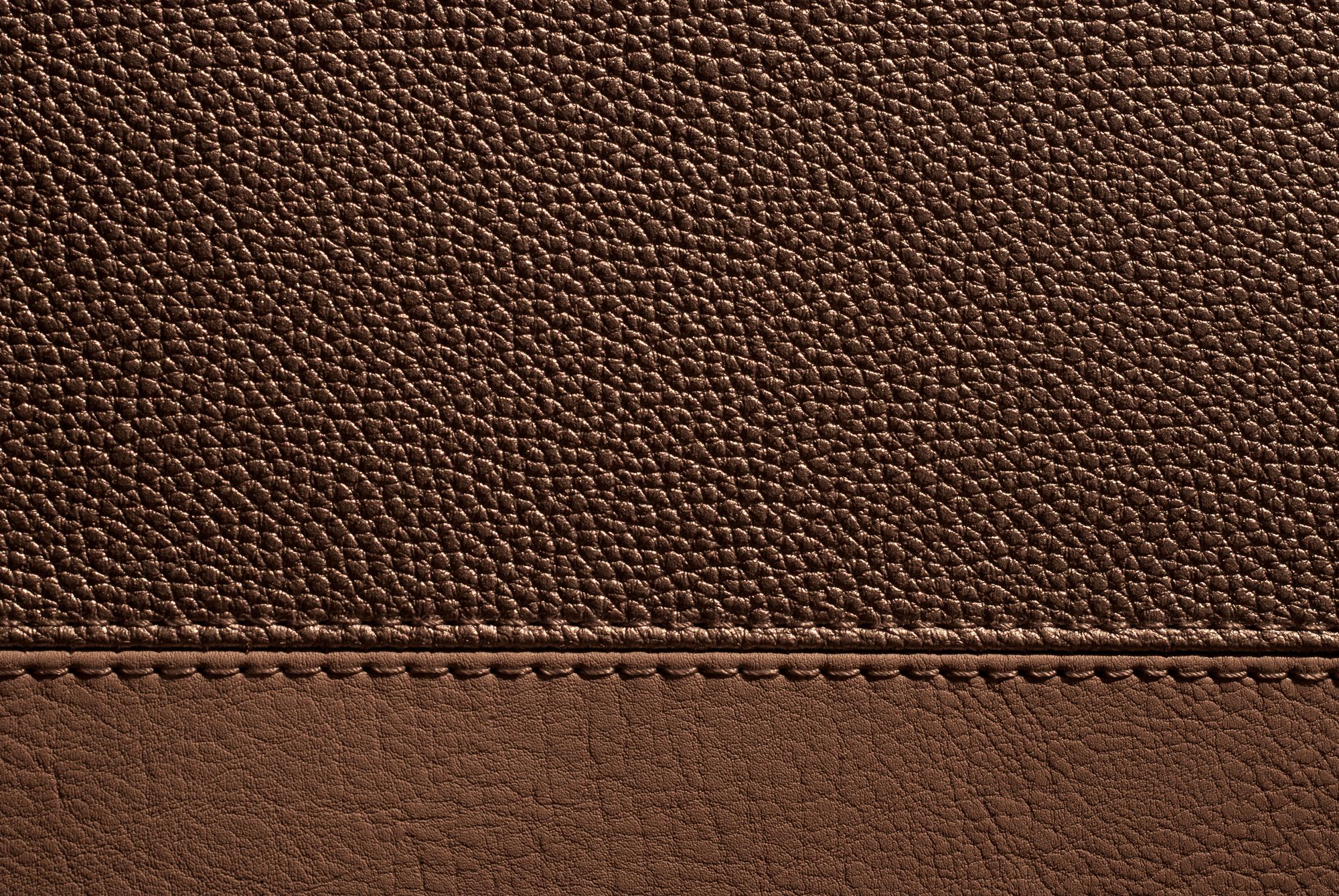
| Pigmented (protected) | A polymer topcoat sits over the hide; oil is slow to penetrate | Lowest — most family sofas are this |
| Semi-aniline | A light topcoat with some dye showing through | Moderate |
| Aniline | Dyed through, no topcoat, absorbs on contact | High — and prized for exactly that reason |
| Nubuck | Sanded surface, open nap, absorbs readily | High, and marks easily |
| Suede | Napped underside of the hide, very open | Highest |
Most sofas sold as "leather" in India are pigmented, which is the good news — pigmented leather is the most forgiving of the five and the most straightforward to protect.
Aniline is the opposite case. It is the most beautiful of the five, it develops the patina that leather enthusiasts are actually talking about, and it darkens fastest. People who choose aniline usually want that. People who chose it without being told sometimes do not.
Where does it show first?
In a predictable order, which is useful because it tells you where to intervene.
The headrest goes first in most households, because hair carries considerably more oil and product than skin does. Then the armrests, particularly the front third where forearms rest. Then the seat cushion of whichever seat the household has silently allocated to one person. Back panels and outside arms, which nobody touches, stay as they were — which is why the contrast becomes visible at all.
If you want to see the true original colour of your sofa, look at the outside of the arm nearest the wall.
What can actually be done about it?
In order of cost and effort, lowest first.
Wipe the contact points. A dry microfibre cloth over headrest and armrests, weekly, removes oil before it has time to absorb. This is unglamorous and it is the single most effective thing anyone reading this can do. It costs nothing.
Reconsider conditioning. Leather conditioner is widely believed to prevent this problem and often contributes to it, because many conditioners are oil-based. Adding oil to a material darkening from oil is working against yourself. Where a leather genuinely needs conditioning, it needs it a great deal less often than most schedules suggest.
Stop using household cleaners. All-purpose sprays, wipes and anything containing alcohol or solvent will strip a topcoat. A stripped topcoat absorbs faster.
Consider a coating — for the right leather. A nano ceramic coating on pigmented or semi-aniline leather adds a repellent layer that slows both oil and liquid absorption at the points that need it. It is applied thinly, it is not a plastic film, and on finished leather it does not meaningfully change the look.
What a coating will not do
It will not reverse darkening that has already happened. A coating seals the leather as it currently is, which means existing darkened areas are preserved rather than corrected. If the contrast already bothers you, the order of operations is restoration first, coating afterwards — and restoration is specialist work.
It will not stop cracking, which comes from dryness and flexing rather than from oil. It will not stop the topcoat wearing thin at high-contact points over many years. And on aniline, nubuck and suede it may not be appropriate at all — those hides are valued for being open and unfinished, and anything applied to them changes what they are.
We would rather say that plainly than treat a hide that should have been left alone.
When is the right time?
Before the darkening starts, on a sofa you intend to keep.
A new pigmented leather sofa, coated in its first months and wiped down weekly, will hold its original colour for considerably longer than the same sofa left to absorb. A five-year-old sofa with a visibly darker headrest is a different and more expensive conversation, because the useful intervention there is restoration rather than protection.
If you are unsure which leather you have, or whether the darkening you are looking at is oil or wear, send us a photograph in daylight and tell us how old the piece is and how it is used. Some of the time the answer is a cloth and a change of habit, and we will say so.
Common questions
Can darkened leather be restored?
Sometimes, by a leather specialist, depending on the leather type and how deep the oil has gone. Pigmented leather responds better than aniline. It is restoration work, not cleaning, and it is not something a coating does.
How do I know which leather I have?
A drop of water on an unseen area is the quick test. On pigmented leather it sits on top. On aniline it darkens the spot within seconds and absorbs. Purchase documentation is more reliable, where it exists.
Does conditioning leather prevent darkening?
Not really, and over-conditioning contributes to it. Many conditioners are oil-based, which adds to the oil already arriving from skin and hair. Less is usually more.
Will a coating work on aniline leather?
Sometimes, with a product made for it, and sometimes we would advise against treating the hide at all. Aniline is prized precisely because it is unfinished, and anything applied to it changes it.
WHERE THIS GETS SPECIFIC
Every recommendation
follows an assessment.
Tell us the object, the material and finish if you know them, and how the space is used. That is enough to begin.
Tell us about your spaceKEEP READING